
Brown County Court Docket Searches
For Brown County court records, the place to start is Minnesota Court Records Online, known as MCRO. Brown County District Court is part of Minnesota's unified court system. Its public search layer lives there. MCRO labels the case activity list Case Details or the Register of Actions. Parties, events, hearings, dispositions, and eligible documents can all appear for a public case. Treat the online result as a locating tool, though. It is not a certified court record.
Search works best with a complete case or citation number. Without one, choose Person or Business. Try the exact spelling first, and narrow the court locations to Brown. A clean result on a name search is not proof that a case is absent. Pending criminal, traffic, and petty-misdemeanor matters can slip past it.
- Open MCRO Case Search and accept its terms before selecting a search mode.
- Use Case Number or Citation Number when a Brown County notice provides one. Enter the complete number without spaces.
- For a Brown County name search, try the exact name, a middle-name variation, or a trailing asterisk after at least two characters.
- Select Brown in the county list for a Brown County search, review the result cards, and open View Case Details for the Register of Actions.
- Use the hearing, document, or Brown County courthouse route when the result does not answer the Brown County record or date question.
A Brown County court docket entry can look like a verdict, but a case status is not an outcome. Check the Dispositions area and the dated events in the docket before you draw any conclusion about the case.
Brown County Court Docket Search in MCRO
MCRO gives the public four ways to look for a Brown County record. Case Search pulls up a Register of Actions for a case. Document Search needs a full case number and lists what documents exist, newest first. Hearing Search finds settings by name, case number, judicial officer, or attorney. Judgment Search covers docketed monetary judgments and satisfactions only. It is not a tally of every case outcome.
Set the Brown County filter before you search. MCRO looks statewide unless told otherwise. Name searches match exactly. The wildcard and Sounds Like tools are separate options, so you cannot stack them into one query. Enter a full Brown County citation or case number with dashes or leading zeros if you like. Just never include spaces. One caution applies. The Minnesota eFile and eServe system is for parties and lawyers filing papers, not for a public docket search.
For county-government context around these court record routes, the Brown County government homepage lays out the offices behind the courthouse and their services.
County government sits apart from the Judicial Branch search system. Even so, its local office routes help when a Brown County court docket needs confirmation from staff.
Court Dockets: What They Show
The Register of Actions is the Brown County court record in chronological form. MCRO lists the newest Case Events at the top. Depending on the case type and the public-access rules, a case page can carry an overview, case information, party information, warrants, charges, interim conditions, assignments, hearings, dispositions, bond or bail activity, and financial information.
Read the entries with care. A document index number can sit beside an event even when no image is attached. A party warrant flag needs the warrant section and case information beside it to mean anything. Remember that a docket entry records activity. It is not always the filed document itself. An MCRO watermark does not certify anything.
| Case Number | The court-assigned identifier. Use the format MCRO displays; traffic matters may use CR or VB segments. |
|---|---|
| Parties | Roles, names, attorneys, and other public party information for the case. |
| Case Events | Reverse-chronological filings, notices, court actions, and linked document index numbers. |
| Hearings | Upcoming and prior settings, with the date, time, and available setting details. |
| Case Assignment | The current judicial assignment where the public case view supplies one. |
| Dispositions | The detailed court result, which should be read instead of treating Open or Closed as an outcome. |
Note: A public event on a Brown County docket has limits. Not every fact or attachment within that event is open to remote viewing.
Brown County Case Number Differences
A citation number is printed on the ticket before any court case exists. The case number comes later, once the filing enters the court system. For traffic matters, MCRO uses CR to mark a case that requires a court appearance. VB marks a payable one. Neither code replaces the notice or the full Case Details record.
Searching by number sidesteps common name-search problems. Pending criminal, traffic, and petty-misdemeanor defendant records can be limited in remote name results. That limit applies before conviction. A complete Brown County number also avoids confusion. Punctuation, initials, and similar spellings matter less. So does a result set that hits its display limit.
- Register of Actions
- MCRO’s case-activity record, including proceedings, filings, and public outcomes.
- Citation number
- The preprinted ticket identifier, separate from a later Brown County court case number.
- Disposition
- The court’s result for a charge or case, such as a dismissal, conviction, settlement, or judgment.
- Appear By date
- The deadline shown for resolving a payable citation or setting a hearing without later consequences.
Brown County Courts and Their Dockets
Brown County has one location of the Minnesota District Court, inside the Fifth Judicial District. Its jurisdiction is original. It covers civil, family, probate, juvenile, criminal, and traffic matters filed in the county. No separate Brown municipal court, justice court, or city court exists alongside it. A city police department, the county attorney, or a city office can originate a citation or complaint. But the court record is different. Brown County Court Administration keeps it once anything is filed.
Appeals are a different track. Minnesota Court of Appeals records do not live in Brown District Court MCRO results. A notice of appeal may still show on the local Register of Actions. The case itself moves through the state appellate system. For administration, Brown County belongs to the Fifth Judicial District's broader structure.
| Court or record source | Brown County docket covers | Where to search or ask |
|---|---|---|
| Brown County District Court | Civil, criminal, traffic, family, probate, juvenile, and conciliation matters filed in Brown County | MCRO, Brown County public terminal, or Brown Court Administration |
| Minnesota Court of Appeals | Appeals from Brown County trial-court decisions | Appellate court records, not the Brown trial-court case search |
| City police and city offices | Originating enforcement and municipal administration records | Not a substitute for a Brown County court docket |
Brown County Court Docket Terminal Access
Sitting at a courthouse terminal is not the same as searching from home. Minnesota's statewide case-record access page explains the setup. District courthouses offer public terminals for statewide electronic records plus a local paper-file counter. That matters when a case type, field, or document is public yet excluded from remote display.
Age can hide things too. Public documents before July 1, 2015 can have limited remote availability, and some retained files remain paper or archival records. Brown County Court Administration is the office to call. Ask about a public terminal, an older file, a copy question, or a certified record. A missing online result may just mean restricted remote access. It does not mean the court holds no case.
For the official office location and contact route, the Court Administration directory lists the details.
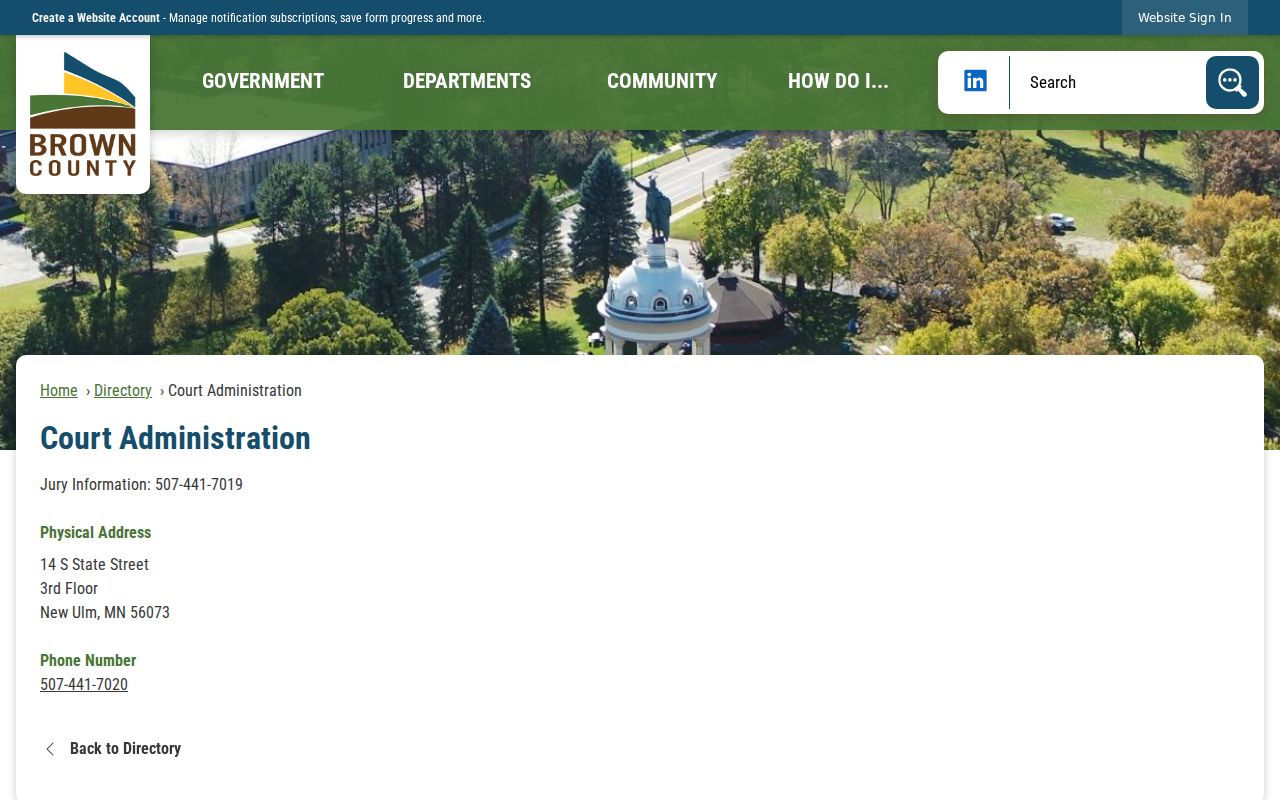
Court Administration is the local office to ask, not a city desk or a police agency, when you need a Brown County court docket in person.
Court Dates and Settings in Brown County
A hearing date can surface in several places. Check a party's notice, MCRO Hearing Search, the Case Details Register of Actions, and the Brown County Weekly Public Court Calendar. The calendar itself is a searchable PDF that the Brown County court page links. The clerk posts it at 7:00 a.m. on business days and refreshes it hourly. It lists courtroom hearings on the schedule, though not every action the court handles.
Treat any setting that matters as worth double-checking. Courtroom, judge, and case assignments shift. Compare the newest hearing event, the current PDF, and the notice the party received. The printed calendars outside the courtrooms and in the public lobbies help too. They give the freshest daily view. When something is missing or the sources disagree, call Brown County Court Administration. Do not assume the hearing was canceled. The Brown County court schedule page gathers the detailed date routes in one place.
The official Brown court page points to the local calendar and other court services.
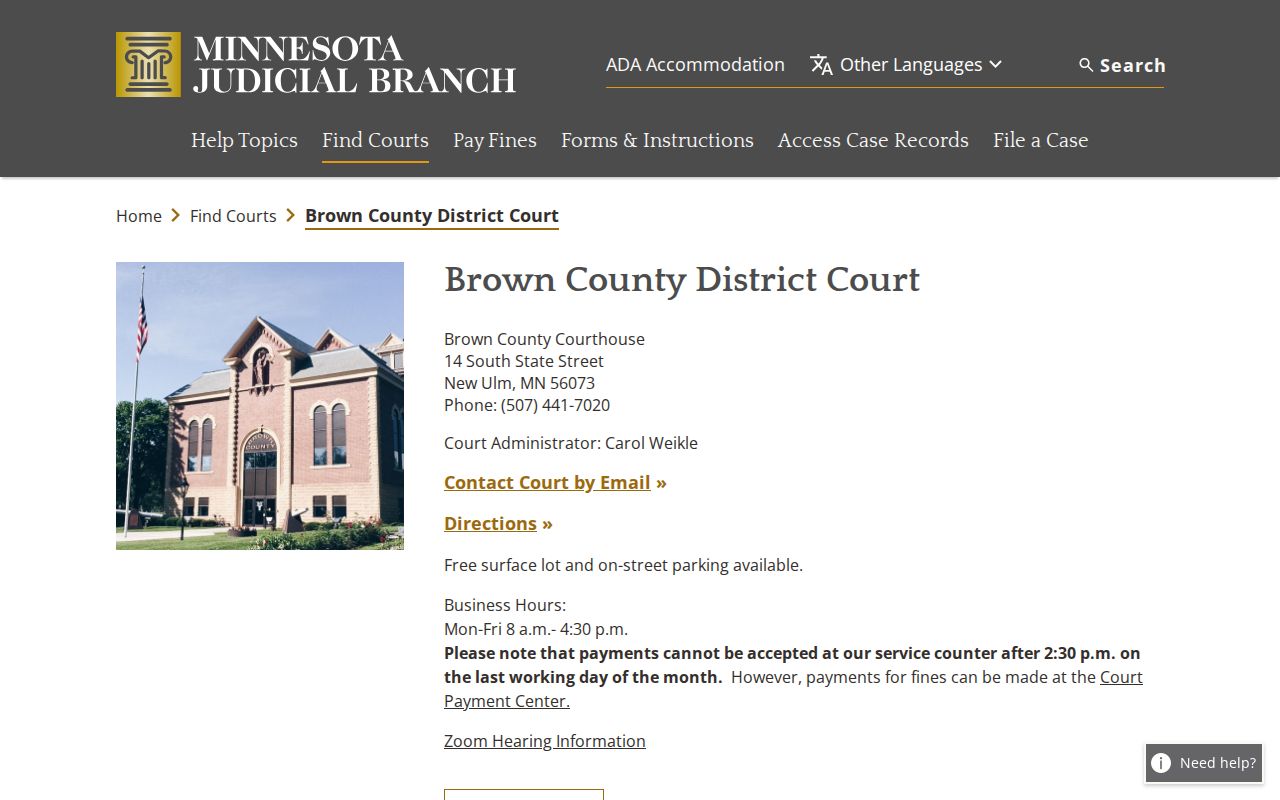
The Brown County calendar changes constantly, so the hour it updates and the version at the courthouse can both matter for a docket search.
Brown County Court Calendar Updates
A setting is a court event on the calendar, not necessarily a trial date. MCRO Hearing Search lets you search a Brown County court docket several ways. You can use case number, name, judicial officer, attorney, date, category, and the Brown County court location. The Register of Actions often adds context the search result lacks. Same-day hearings can still sit under Upcoming. That can happen after the hearing itself, or after a continuance moves them.
Fifth Judicial District practice frowns on continuances, Brown County trial dates above all. A request must normally be in writing, state its reasons, and show good cause. Each Brown County court makes its own call. A party with an active warrant gets no continuance consideration at all. To change a remote or in-person appearance, the OTH1002 form is only a request. It is never permission on its own.
Note: An old calendar line is not reliable. Trust the newest hearing event or Brown County Court Administration when they say something different.
Docket Access Under Minnesota Law
Access to Brown County court records runs mainly through Judicial Branch rules. It is not a generic county-record request. Rule 8 opens accessible records to public inspection and copying. It also allows remote access to registers, calendars, indexes, judgment dockets, and court-prepared documents. The rule separates what a remote screen shows from what a Brown County courthouse terminal may offer.
Rule 4 lists what stays closed or restricted: certain domestic-abuse and harassment matters, juvenile matters, adoptions, and protected proceedings. Sensitive identifiers get extra protection. Brown County Court Administration can explain the access route for a specific Brown County file. It cannot make an MCRO result into a certified record.
Key Minnesota access rules:
Minnesota Rule of Public Access 8 permits inspection, copying, registers, calendars, and defined remote access subject to limits.
Minnesota Rule of Public Access 4 identifies court records that are not public or not remotely available.
Minnesota General Rule of Practice 11 protects identifiers that must be withheld or placed on a confidential form.
Minnesota Statutes section 609A.01 explains expungement and sealed criminal records.
Brown County Restricted Court Records
Some Brown County court records never display remotely. Part of the file may still be open to the public at the courthouse. Juvenile, CHIPS, domestic-abuse, harassment, adoption, commitment, and protected family materials can all be limited. A family case may show public orders or judgments. The motions, affidavits, and financial papers can still stay offline. Expungement seals a record and restricts disclosure under the governing authority.
Pending criminal and traffic dockets trip people up. A defendant-name search may return nothing before conviction. Start with the full case or citation number. When a public Brown County case or document is missing from MCRO, try the courthouse terminal. Ask Brown Court Administration which access form or court order applies. A confidential-record request belongs at the courthouse, never with a city clerk or police agency.
The official alternate Brown court page still lists the local court location and service information.
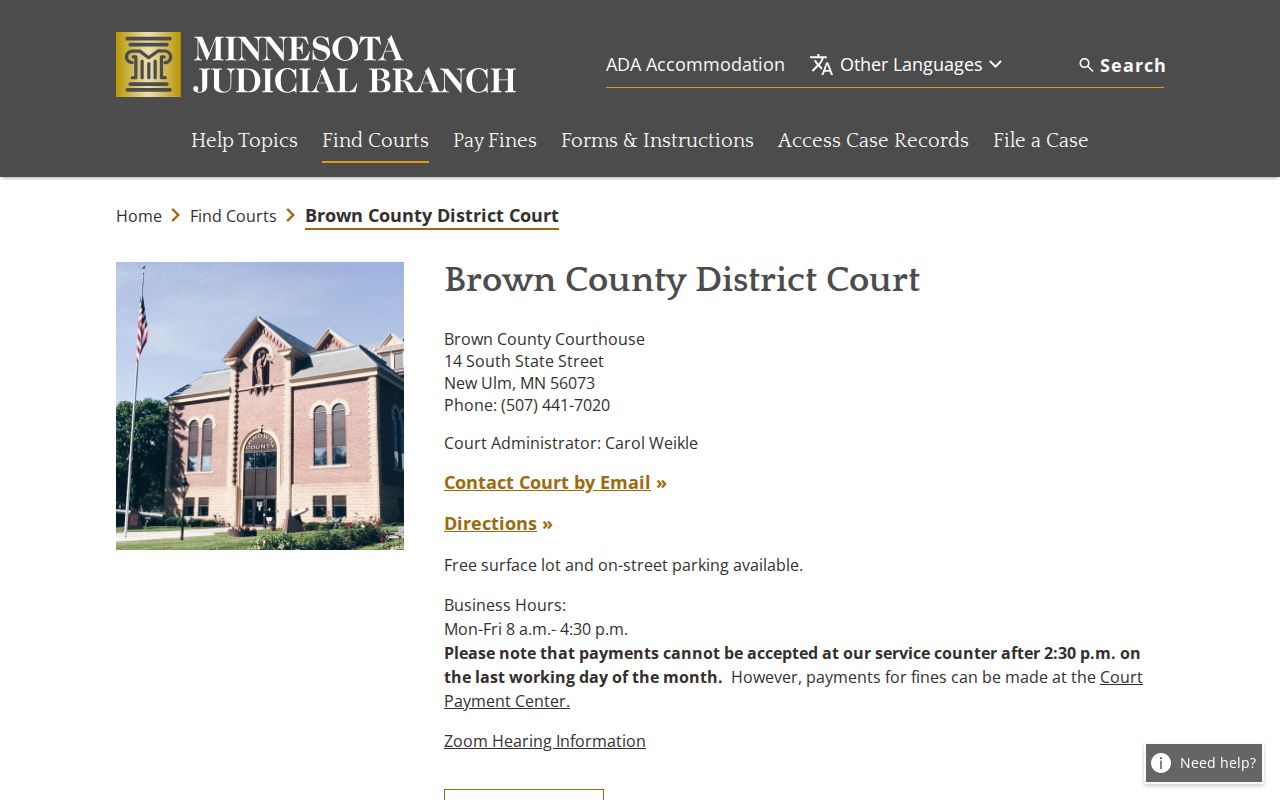
The official listing confirms the point. The district-court location is where access questions get answered, not the remote search.
How the Clerk Keeps Docket Records
Minnesota puts these Brown County court records under Court Administration and the District Court Administrator. There is no separate county or district clerk. Brown County Court Administration keeps the local Brown County District Court record across civil, family, probate, juvenile, criminal, and traffic cases. For paper files, certified copies, access questions, and anything the remote system will not show, it is the right contact.
The Brown County courthouse offers a public terminal and a paper counter. A statewide copy-request form can go to Brown County Court Administration with payment. That works as long as the case was filed in Brown County. The form asks for the case type, the file number when known, and the parties. It also asks for a document description, the copy type, and how you want delivery. Plain, nonconfidential copies can travel by the form's email or fax option. Sensitive material needs the court's direction first.
Brown County Court Administration
Brown County Courthouse, 14 S State Street, Third Floor
New Ulm, MN 56073
507-441-7020
Brown County Court Copy Fees
Copies cost little in Brown County. MCRO downloads are free whenever the document is online, though they carry no official stamp. At the Brown County District Court counter, an uncertified civil or criminal instrument costs nothing. A certified copy runs $14, and a certified-and-exemplified copy is $28. Tell staff which service you want. These fees cover copies and not a search of the docket itself.
The statewide fee schedule draws the same practical lines. Certification means the court has attested the copy. Exemplification adds one more authentication layer on top of that. A transcript is something else entirely. It is the official written record of a proceeding, ordered through the Brown County court reporter rather than the docket counter.
| Brown County court copy | Published amount |
|---|---|
| Uncertified court instrument or printout | $0 |
| Certified civil or criminal instrument | $14 |
| Certified and exemplified copy | $28 |
| Transcript of judgment issued or docketed | $40 |
The Brown County office-building directory lists each county office location around the courthouse and what it handles.
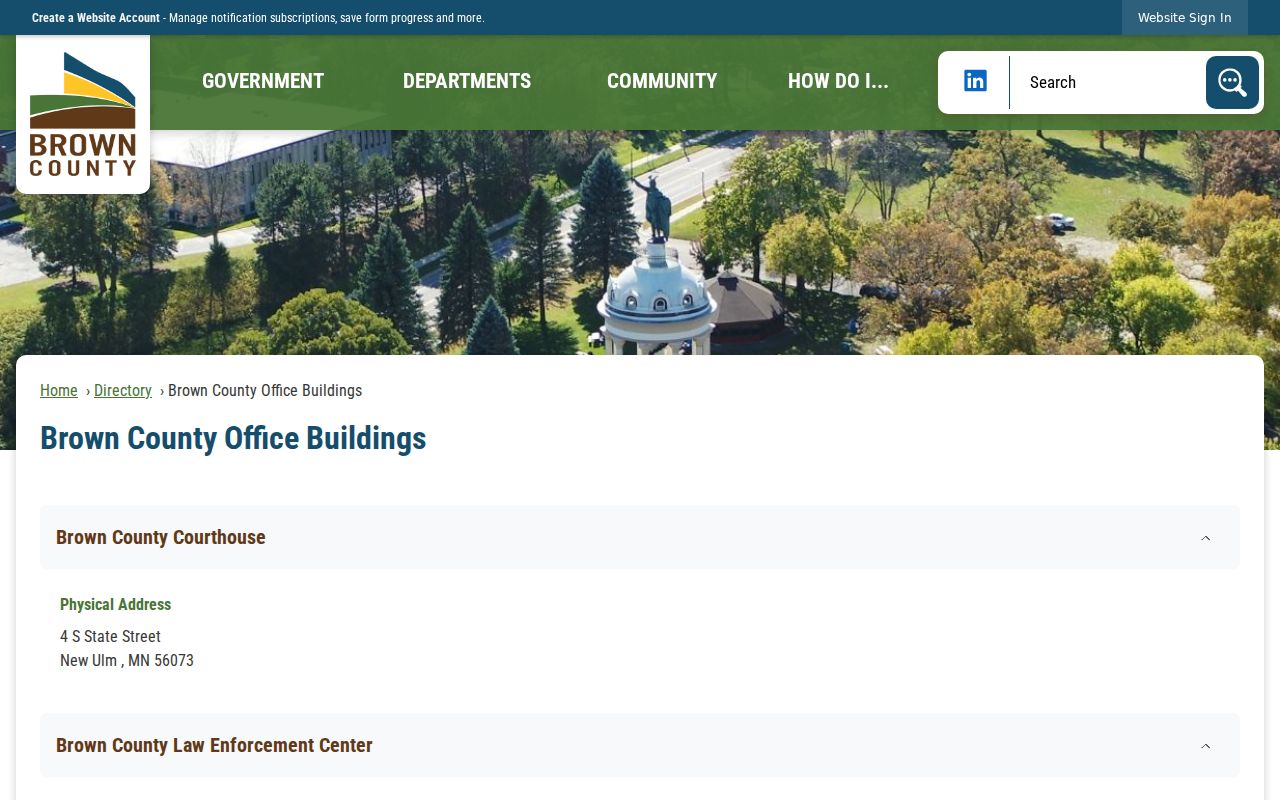
County office locations add helpful context. For a court file, though, the Court Administration counter stays the official route.
City-by-City Court Dockets in Brown County
All five of Brown County's largest cities send their filed court matters to one place. That place is Brown County District Court. City websites cover municipal offices, ordinances, and local administration. They cannot supply the District Court Register of Actions, the Brown court calendar, or a certified record from Court Administration. Even if a city police department wrote the citation, search the Brown venue for the case.
Brown County's official city directory offers local-government background on the five communities below. Population figures come from the Brown County 2020 Census table.
New Ulm Court Records
14,120 people in 2020. New Ulm is the county seat, while the court record remains with Brown County District Court.
Sleepy Eye Court Records
3,452 people in 2020. City administration is local, but no separate Brown County municipal court docket was located.
Springfield Court Records
2,027 people in 2020. Court dates and filed cases use the Brown County District Court route.
Hanska Court Records
382 people in 2020. City notices are not a substitute for a Brown County court case event.
Comfrey Court Records
378 people in 2020. Confirm whether a citation was filed in Brown County or Cottonwood County because Comfrey has two-county geography.
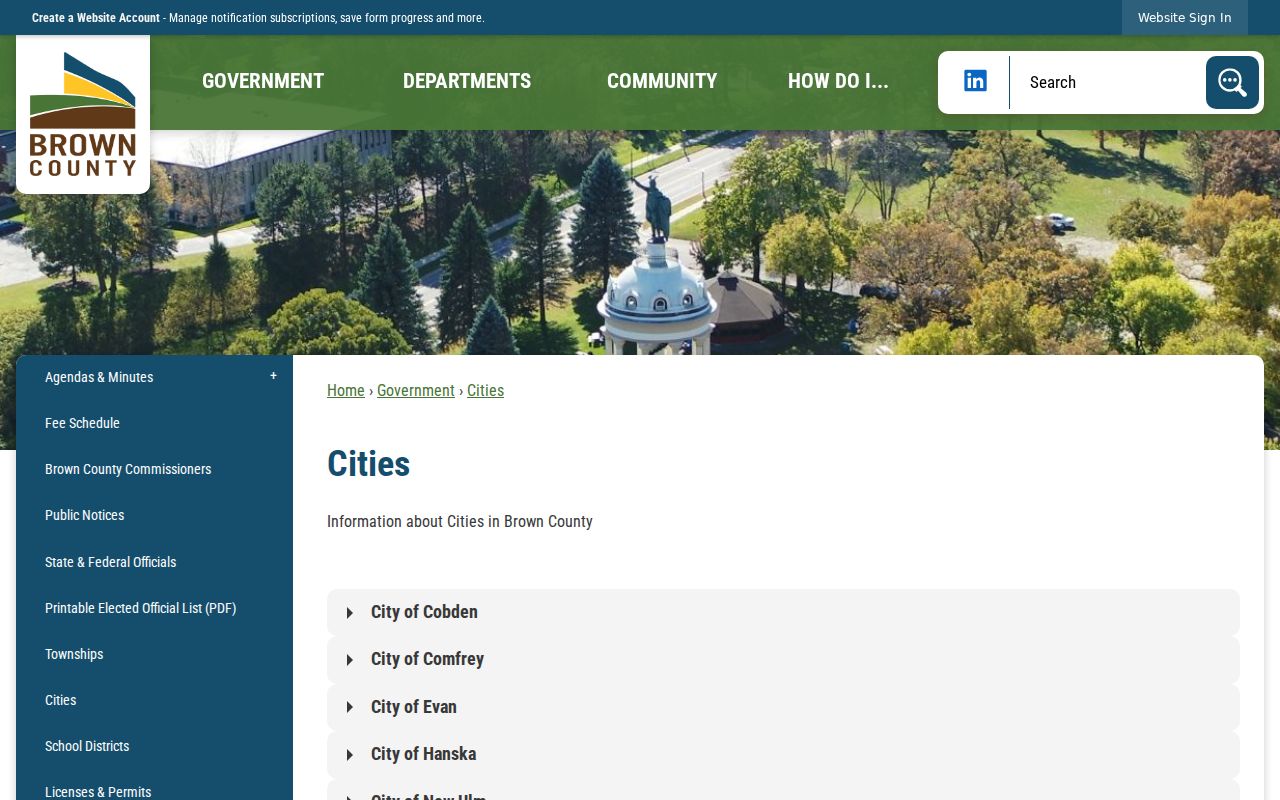
The city directory points you to community offices. Filed cases, though, all travel one Brown County court docket path through the statewide system.
Brown County Court Docket History
Brown County dedicated its present courthouse in 1891, after earlier buildings had served the county. That timeline matters for records. Older material may sit in paper files, bound volumes, microfilm, or retained storage. Some of it may be destroyed. So an online search is only a first step, and no public database promises that every historic Brown County court docket document has been scanned.
The statewide tools arrived piece by piece. MCRO Document Search launched in 2021. Case Search and the Register of Actions followed that same year. Hearing and Judgment Search came in 2022. MCRO then replaced MPA Remote in 2023. These were state-level changes, not a Brown County vendor project, and Court Administration plus the courthouse terminal still bridge the historic record and the current docket system.
The official Brown courthouse history records the building's civic past.
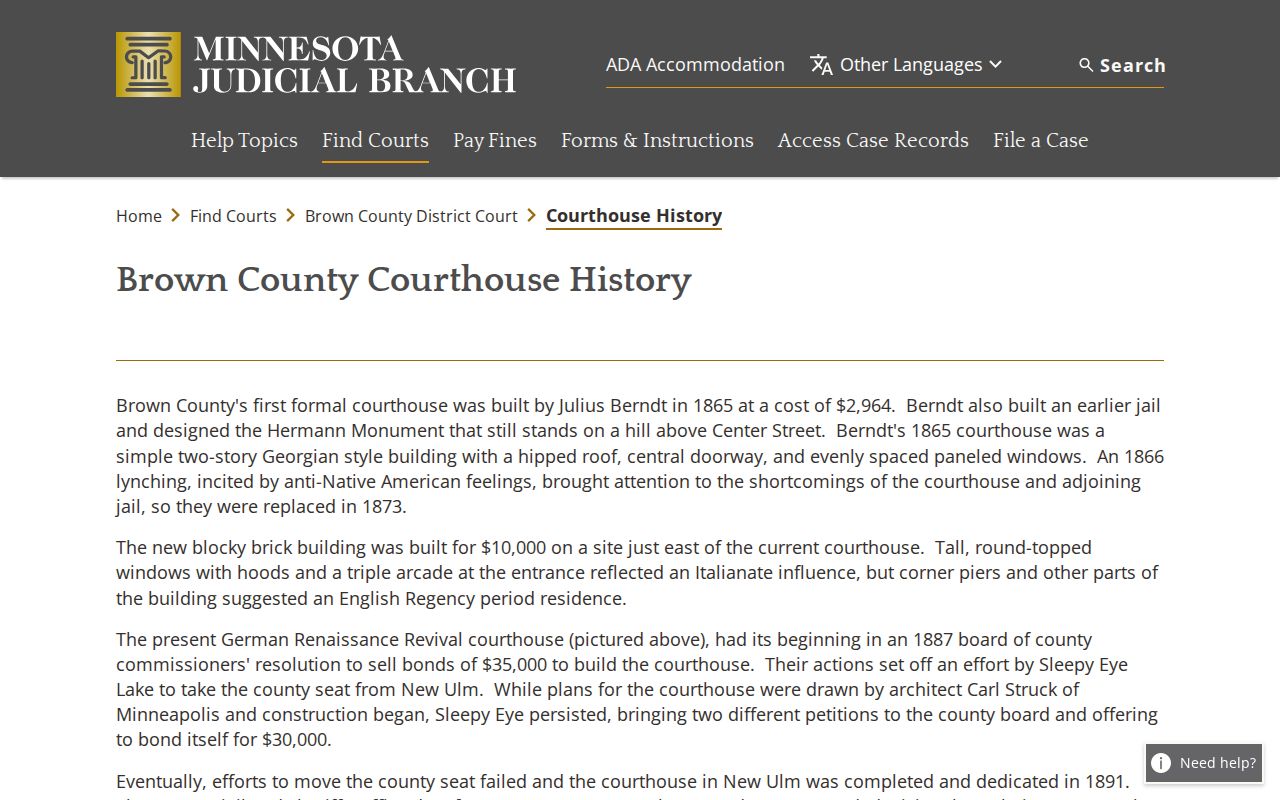
That history explains a practical split. A current online court docket and an older physical record can demand two different access methods.
Map and Directions to the Brown County Courthouse
Brown County District Court civil, family, probate, juvenile, criminal, and traffic files are kept at the Brown County Courthouse, 14 South State Street in New Ulm, where Court Administration occupies the third floor. The 1891 German Renaissance Revival building sits at Center Street and State Street, the county's single trial-court location.
Brown County Courthouse
14 South State Street, Third Floor
New Ulm, MN 56073
507-441-7020
Monday through Friday, 8:00 a.m. to 4:30 p.m.
Free surface-lot and on-street parking are available, including along First Street South and State Street. Security screening is required at the courthouse entrance, so allow time and leave behind anything that could be treated as a weapon.